Best Beaches Near Barcelona for Swimming
About Best Beaches Near Barcelona for Swimming
A swimmer's guide to Barcelona's coast — water temperatures, snorkeling routes, swim zones, and where to go by ability level.
Most guides to the best beaches near Barcelona for swimming describe the same sand and repeat the same "crystal-clear water" cliché. This one is different: it's a practical guide for people who actually want to swim — with water temperature data by month, snorkeling routes with specific landmarks, swim-zone layouts, and recommendations sorted by ability level. If you're looking for general beach descriptions, see the individual beach guides. This article covers the swimming layer that those guides don't.
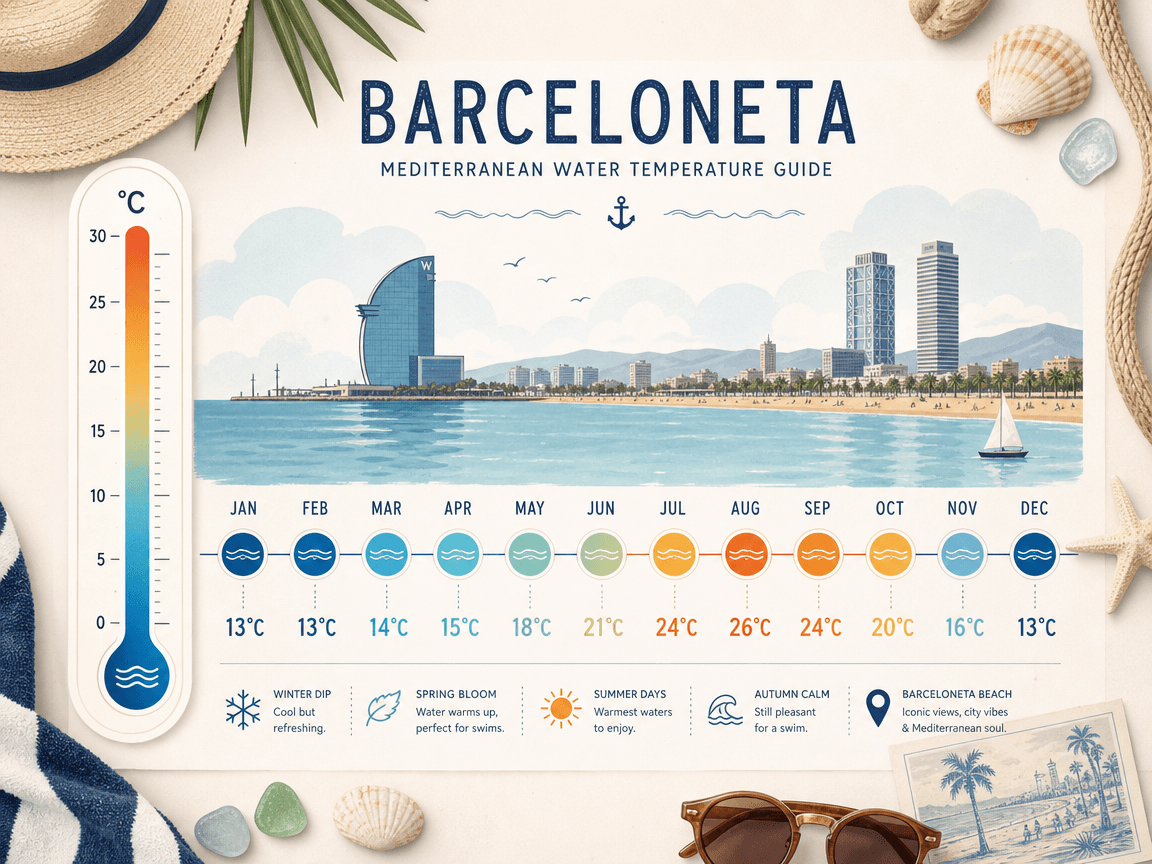
Mediterranean Water Temperatures by Month
The Mediterranean off Barcelona is warm enough for comfortable swimming from late June through September, but the temperature curve matters if you're planning a swim-focused trip.
| Month | Avg water temp | Comfort level | Notes |
|---|---|---|---|
| January-March | 13-14°C | Cold | Only with a wetsuit; local cold-water swimmers only |
| April-May | 15-18°C | Cool | Wetsuit recommended; too cold for most swimmers |
| June | 19-22°C | Comfortable | Start of the swim season; mornings still cool |
| July | 23-25°C | Warm | Peak season; warmest in shallow bays by late afternoon |
| August | 25-26°C | Warm | Warmest month; water feels bathtub-warm in sheltered coves |
| September | 23-25°C | Warm | Best swimming month — sea retains summer heat, crowds thin |
| October | 20-22°C | Comfortable | Last reliable month for swimming without a wetsuit |
| November-December | 16-18°C | Cool | Wetsuit territory; only for dedicated swimmers |
The September sweet spot: The sea reaches its peak temperature in late August and holds it through September, while air temperatures drop to a comfortable 24-27°C and crowds disappear. If swimming is your priority, September is the best month on the Catalan coast.
Swim Zones and Safety Infrastructure
Barcelona's city beaches use a standardized system that most guides mention but few explain in detail.
The buoyed swim zones at Nova Icària, Bogatell, and Barceloneta mark areas where swimming is permitted and watercraft are prohibited. The zones extend roughly 50-80 meters from the shoreline and are marked by yellow buoys. Outside these zones, you may encounter paddleboards, kayaks, and (at designated areas) jet skis. If you want to swim laps or distance, stay inside the buoys.
Lifeguard coverage at city beaches runs from roughly mid-June through mid-September, with service hours 10:30am-7:30pm. Outside these hours and months, there are no lifeguards — swim at your own risk. The lifeguard towers fly the flag system: green (safe), yellow (caution — usually for currents or jellyfish), red (no swimming). Flags can change during the day based on conditions.
Water quality monitoring is conducted daily during the season by the Barcelona City Council. Results are published on the Barcelona.cat beaches page and updated every morning. After heavy rain (10mm+ in 24 hours), runoff from the city's drainage system can temporarily elevate bacteria levels along the urban coastline — the standard advice is to wait 24-48 hours after a storm before swimming at city beaches. This does not affect the more remote coves (Garraf, Ocata) as much, since they lack the urban drainage infrastructure.
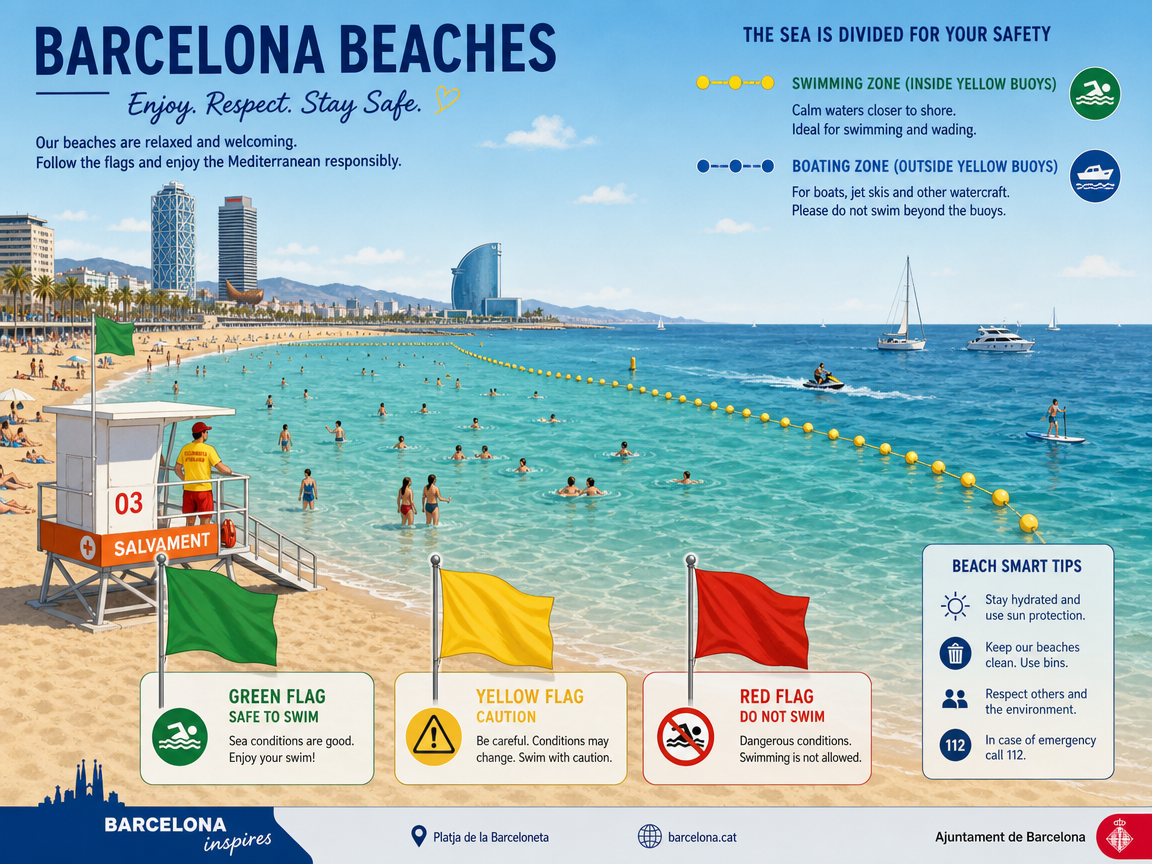 Barcelona beach swim zones and safety guide — yellow buoyed swim area, green/yellow/red lifeguard flag system, and lifeguard tower infographic
Where to Swim by Ability Level
Beginners and families with children
- Nova Icària — The breakwater at the Bogatell end creates a still, shallow pool effect. The water is the calmest of any city beach, and the gentle slope means you can wade out 30+ meters before reaching chest depth. The children's play area and first-aid station are right on the sand.
- Castelldefels — The 5-kilometer beach has a gentle slope that keeps water shallow for a long way out. The sheer width means you can always find a quiet spot away from other swimmers. The flight path overhead is audible but doesn't affect the swimming.
Intermediate swimmers looking for distance
- Bogatell — The 702-meter beach has a long, straight swim zone parallel to the shore, good for laps. The water is clean with good visibility, and the breakwaters at either end provide reference points for distance swimming. Less crowded than Barceloneta, so you won't be dodging other swimmers.
- Barceloneta — The 422-meter swim zone is the longest continuous buoyed area on the city waterfront. It's busier, but the length makes it the best city beach for proper distance swimming. Go before 9am in summer to avoid the crowds.
Advanced swimmers and snorkelers
- Garraf — The best snorkeling near Barcelona. The cove is small but the water clarity is exceptional, and the rocky formations at either end attract small fish (mostly bream, sargo, and the occasional octopus). The sheltered position means calm water even when other beaches are choppy.
- Ocata (El Masnou) — The widest beach near Barcelona, with water visibility that lets you see the seabed clearly. Less developed than the city beaches, with a natural setting that feels more remote. The R1 train drops you a 5-minute walk from the sand.
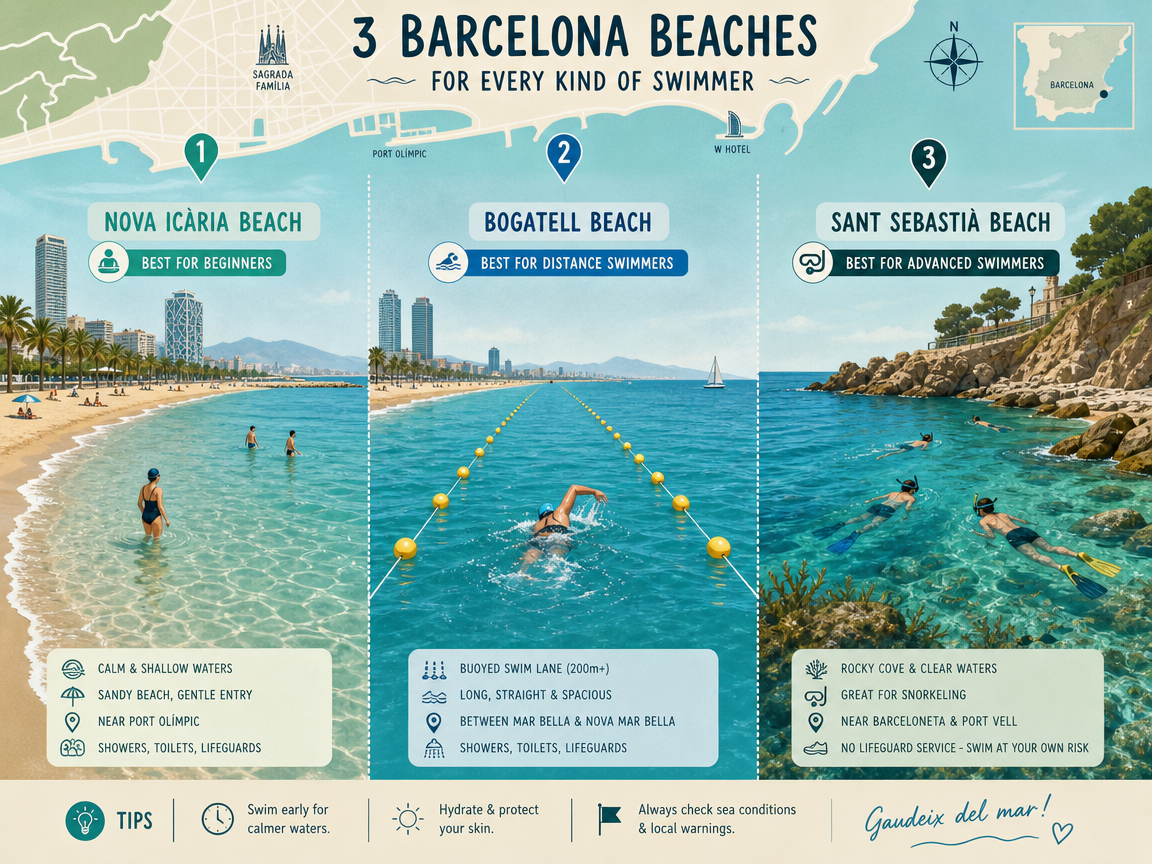 Best beaches near Barcelona by swimming ability level — beginner, intermediate, and advanced/snorkeler beach picks infographic
Snorkeling Routes: Where to Look Underwater
Garraf snorkeling route (45 minutes) Start at the southern end of the cove near the barraques (wooden huts). Swim along the rocky cliff face heading north — the rocks here have small overhangs and crevices where fish shelter. Look for bream (sargo) and wrasse near the rocks, and keep an eye out for octopus in the crevices (they're more active in late afternoon). The route ends at the northern headland, where the rocks meet the sand — turn around here and swim back along the surface. Water depth ranges from 2-5 meters along the route. Bring water shoes — the entry over rocks is slippery.
Bogatell breakwater route (30 minutes) Start at the Mar Bella breakwater (the northeastern end of Bogatell beach). Swim along the breakwater rocks heading out toward the sea — the rocks attract small fish and the water is clearer here than at the center of the beach. The depth reaches 4-5 meters at the end of the breakwater, where you can see the rocks drop off. Turn around and swim back along the surface. This route is best in the morning before boat traffic picks up.
Ocata reef route (60 minutes) About 100 meters offshore from Ocata beach, there's a rocky reef area that attracts fish and is visible from the surface on a calm day. Swim out to the reef (check that no flags are flying for boat traffic first), snorkel the reef area, and swim back. The depth is 3-6 meters, and the water clarity is the best of any beach within 30 minutes of Barcelona. Only attempt in calm conditions — the exposed location means swell can pick up quickly.
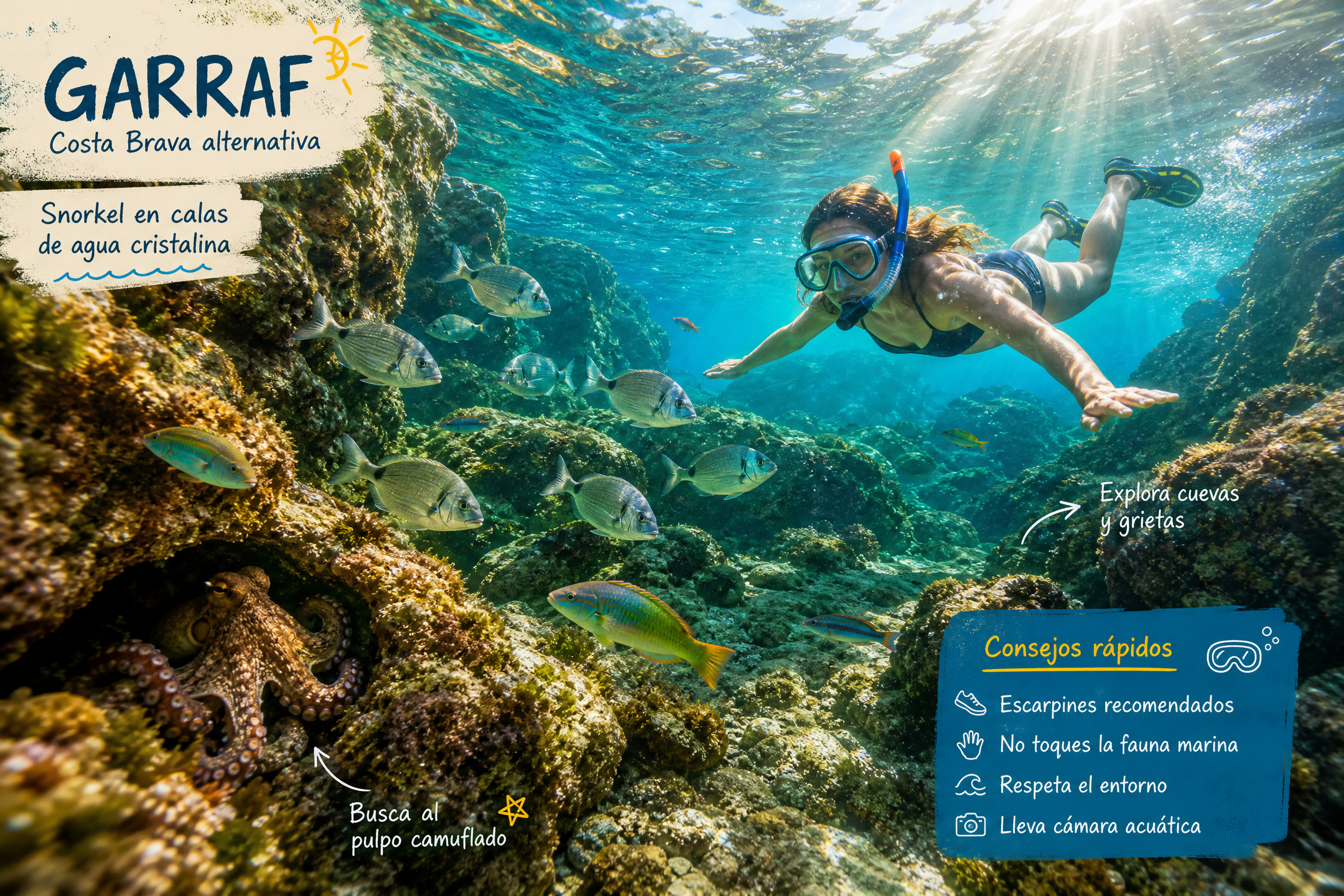 Snorkeling route map guide near Barcelona — Garraf cove, Bogatell breakwater, and Ocata reef routes with fish and marine life
Jellyfish: What to Know
Jellyfish (meduses in Catalan) appear periodically along the Catalan coast, most commonly in late summer (August-September) when water temperatures peak. The most common species is the mauve stinger (Pelagia noctiluca) — small, purplish, with a painful but not dangerous sting.
If you see jellyfish: Check the lifeguard flag — a yellow flag often means jellyfish are present. Lifeguards post daily notices at the lifeguard towers. If you're stung, rinse with seawater (not fresh water, which can trigger more venom release) and ask the lifeguard for vinegar, which neutralizes the sting. Most stings are uncomfortable but not serious.
When they're worst: Warm, still days in late August and September, especially at sheltered coves where the jellyfish can accumulate. The city beaches (Barceloneta, Bogatell, Nova Icària) are more affected than the open-coast beaches (Ocata, Castelldefels).
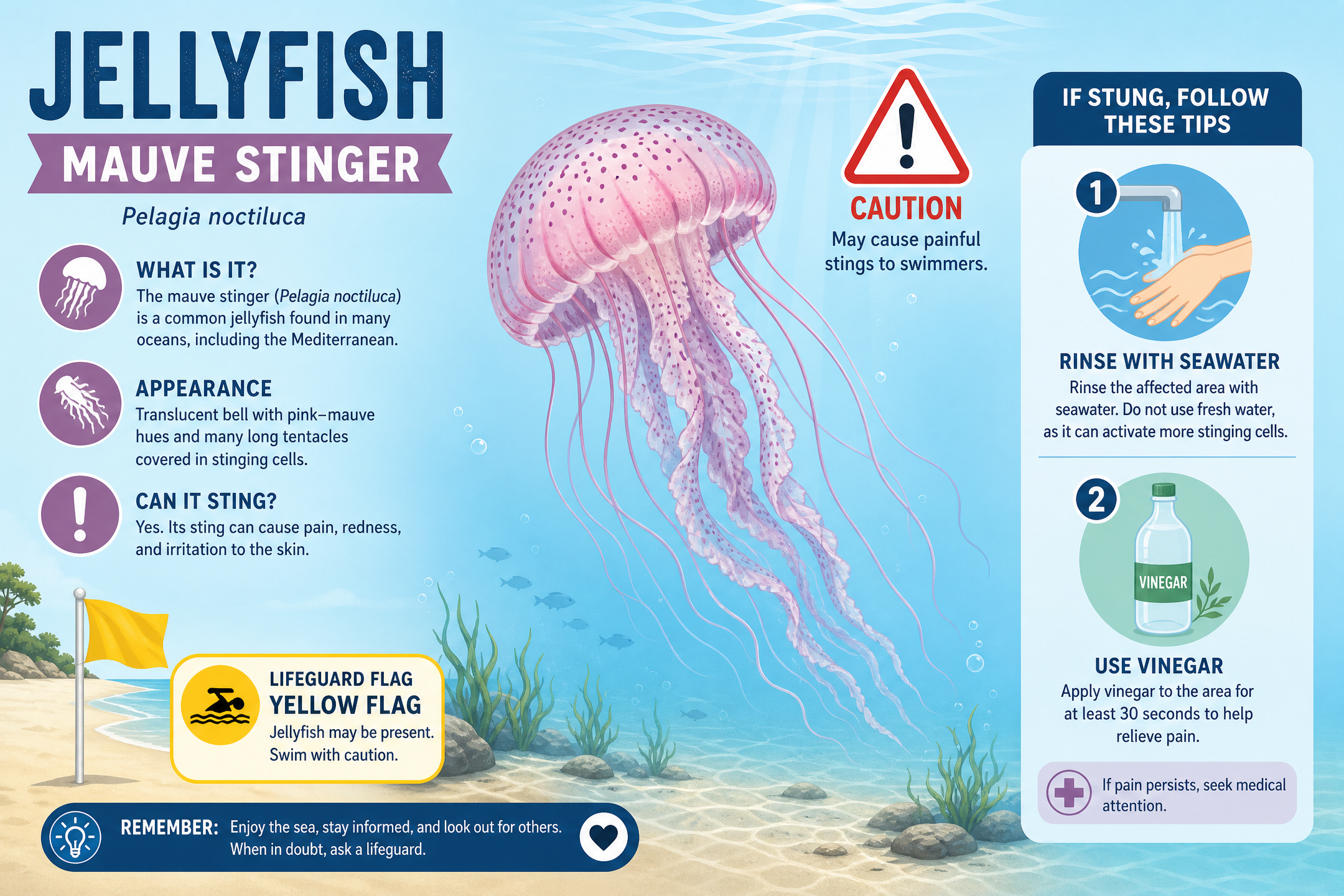 Jellyfish safety guide on Catalan beaches — mauve stinger jellyfish, yellow flag warning, and first-aid tips infographic
Swimming Gear for the Catalan Coast
Water shoes (€10-15) — Essential for Garraf (rocky entry), Ocata (some pebbly patches), and the breakwater routes at Bogatell. The city beaches have sandy entries, so shoes aren't needed there.
Snorkel mask and tube (€25-40) — Worth bringing if you plan to snorkel at Garraf or the Bogatell breakwater. Rental is available at Barceloneta's water sports centers, but having your own means you can snorkel at the more remote coves where there are no rentals.
Wetsuit (optional, €40-80 to buy) — Only needed for swimming before June or after October, or for cold-water swimmers in winter. The Mediterranean is warm enough for bare-skin swimming from June through October for most people.
Tow float (€15-25) — Recommended for distance swimming at Bogatell or Barceloneta. The bright inflatable float makes you visible to boats and other swimmers, and it doubles as a dry bag. Most local distance swimmers use one.
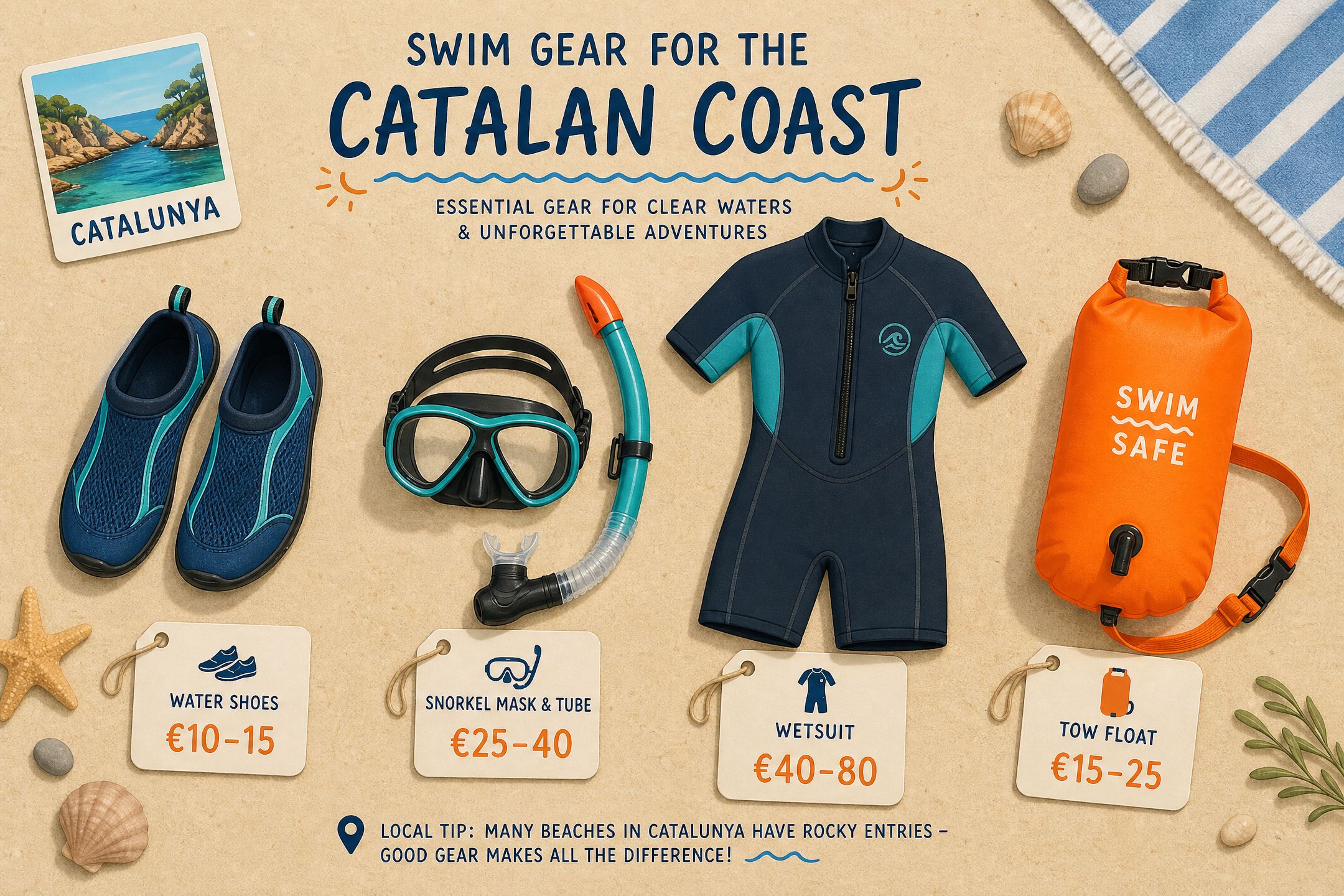 Swimming gear checklist for the Catalan coast — water shoes, snorkel mask, wetsuit, and tow float with prices
Tides and Currents on the Catalan Coast
The Mediterranean has very low tidal variation — typically less than 30 centimeters between high and low tide along the Catalan coast. This means tide times are not a major factor in planning a swim, unlike Atlantic beaches.
The bigger factor is wind. Afternoon sea breezes (from the southwest) pick up most days from around 2pm, creating a slight chop on exposed beaches (Barceloneta, Castelldefels) while leaving sheltered coves (Garraf, Nova Icària) calm. If you want the calmest water, swim in the morning.
Longshore currents can develop at the city beaches when the wind has been blowing onshore for several hours. These are usually gentle but can be tiring for distance swimmers — if you find yourself drifting sideways, swim closer to shore and angle your route against the drift.
Highlights
- Water Temperature Guide: Monthly averages so you know when to swim
- Snorkeling Routes: Specific routes at Garraf, Bogatell, and Ocata with landmarks
- Swim-Zone Layouts: Buoy positions, depths, and lifeguard coverage explained
- Ability-Level Recommendations: Where to go as a beginner, intermediate, or advanced swimmer
- Jellyfish Guide: When they appear, what to do if stung
- Gear Advice: What to bring for snorkeling, distance swimming, and cold-water swimming
Highlights
How to Get There
Various options including metro, train, and car.
Quick Info
Local Tip
Check water quality reports after heavy rain.
Other Beaches

Best Beaches Near Barcelona by Train
20-100 km from BarcelonaBest Beaches Near Barcelona for Families
0-40 km from BarcelonaBest Beaches Near Barcelona Airport
5-20 km from Barcelona AirportBest Beaches Near Barcelona City
0-5 km from city center