Best Beach Towns Near Barcelona
About Best Beach Towns Near Barcelona
A cultural guide to Catalonia's coastal towns — festival calendars, market days, restaurant picks, and where to stay overnight.
Most guides to the best beach towns near Barcelona describe the same towns and repeat the same "charming old town" lines. This one is different: it's a cultural guide for travelers who want to understand what makes each town distinct — the festivals, market days, restaurant scenes, and overnight logic that determine whether a town is worth a day trip or a longer stay. If you're looking for beach descriptions or transport timetables, see the day-trip and beach guides elsewhere on this site. This article covers the cultural layer that those guides don't.
The Five Towns and Their Cultural Identities
Each of these towns has a distinct character shaped by centuries of history. Understanding the identity helps you choose where to spend your time:
- Sitges — Bohemian art and LGBTQ+ culture
- Tossa de Mar — Medieval maritime history
- Cadaqués — Surrealist art and Dalí's legacy
- Begur — Indiano trade wealth and medieval architecture
- Calella de Palafrugell — Maritime folk traditions
Sitges: Bohemian Art and LGBTQ+ Culture
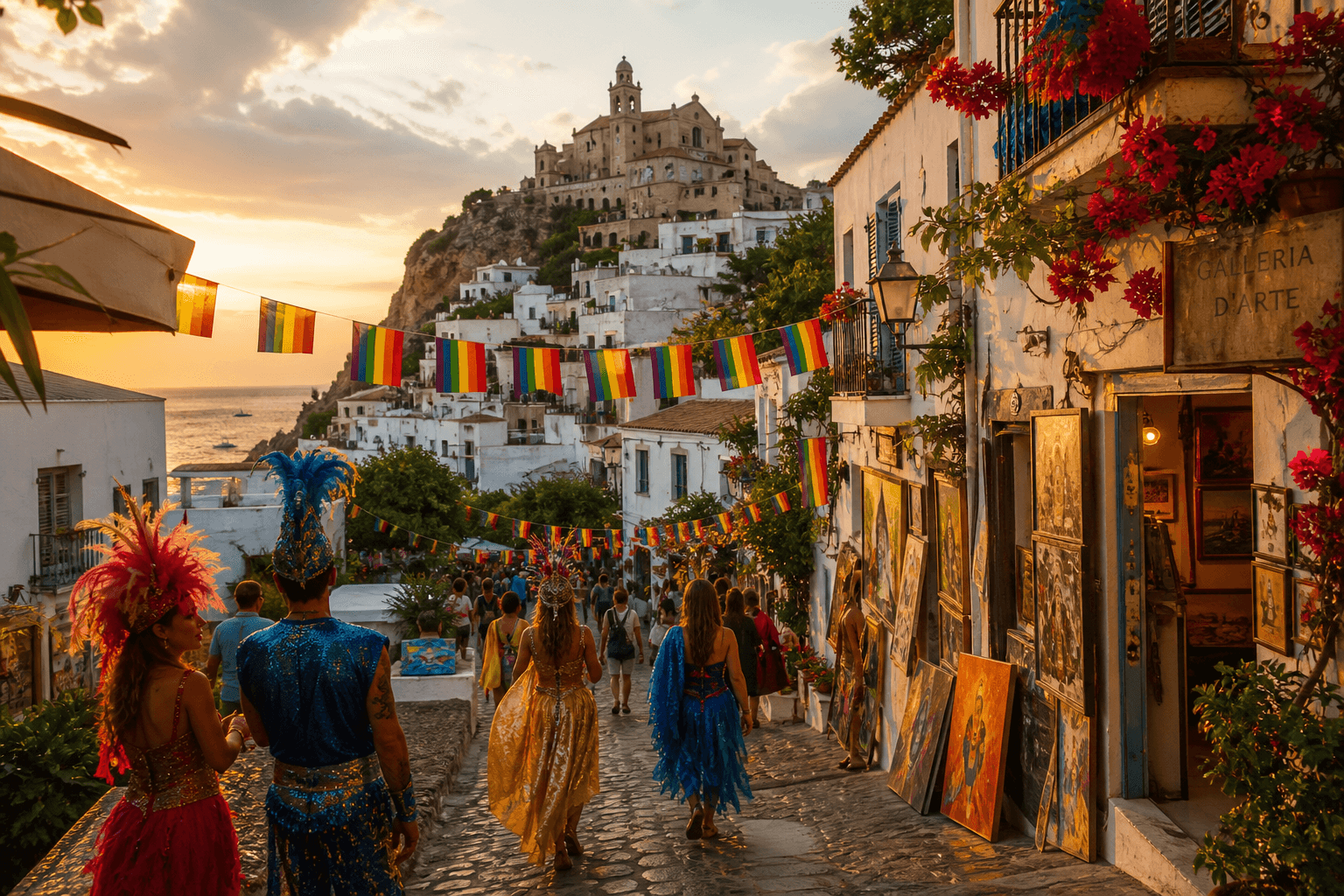
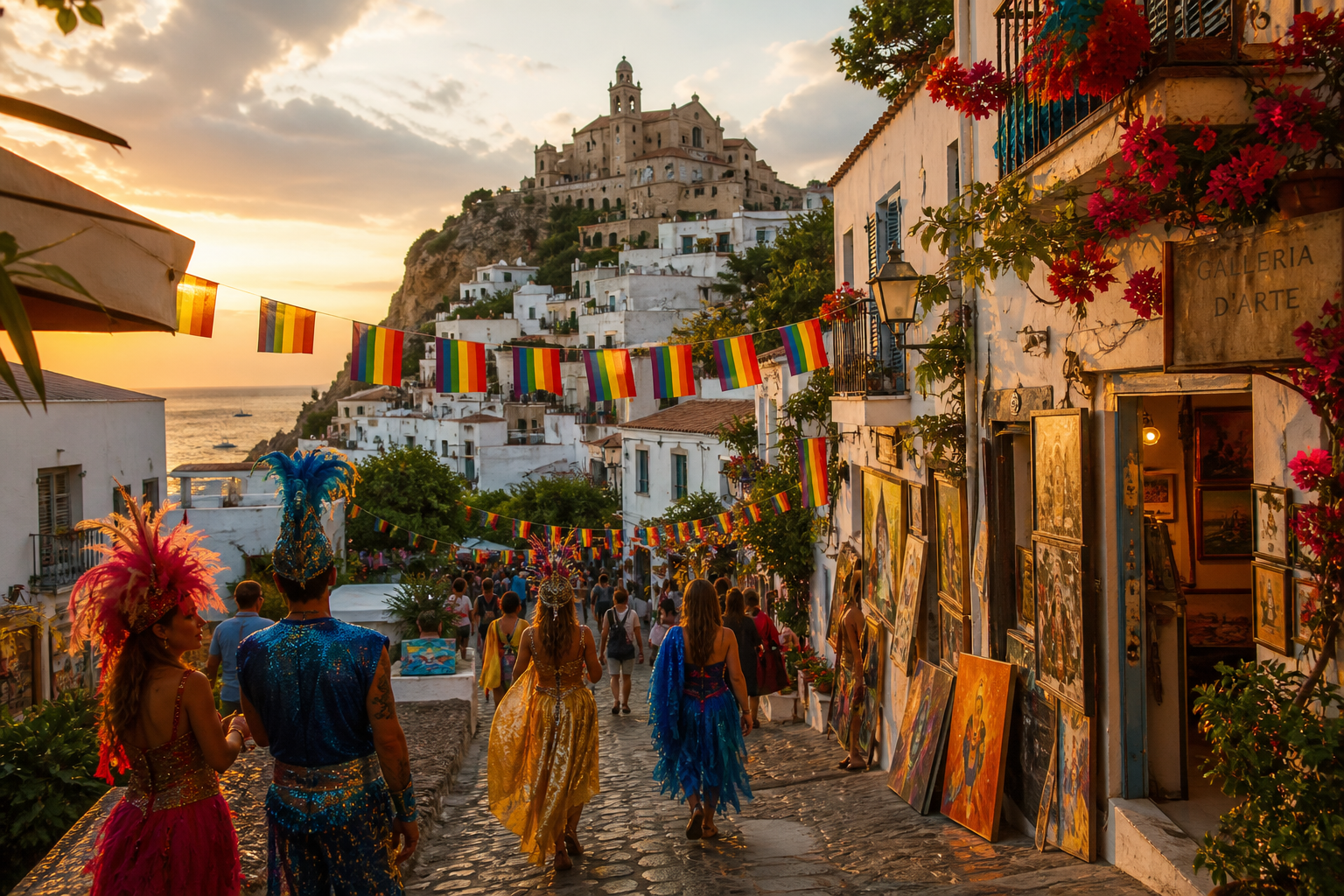 Sitges carnival with rainbow flags, colorful costumes, art galleries, and hilltop church at sunset
Sitges is the most famous coastal town near Barcelona, but its cultural identity goes deeper than beaches. The town has been an artists' colony since the late 19th century, when modernist painter Santiago Rusiñol made it his home and turned it into a gathering place for Catalan intellectuals. That bohemian spirit still defines the town today.
Cultural identity: Artistic, open, festive. Sitges is one of Europe's most established LGBTQ+ destinations, with a year-round scene that peaks during Carnival and Pride. The town has 17 beaches, but most visitors come for the atmosphere as much as the sand.
Festivals and events:
- Carnival (February) — One of Spain's most famous carnivals, with parades, costumes, and street parties lasting a week. Book accommodation 6+ months ahead.
- Sitges Film Festival (October) — International festival specializing in fantasy, horror, and sci-fi cinema. The town fills with filmmakers and fans.
- Sitges Pride (June) — One of Europe's largest Pride celebrations outside major cities.
- Corpus Christi (June) — The town's streets are carpeted with flowers in intricate designs.
Market day: Thursday morning, in the center near the church. Fresh produce, seafood, and local crafts.
Restaurant picks:
- La Salseta (Carrer de Sant Gaudenci 4) — Mediterranean small plates; local favorite, no booking needed for lunch
- Restaurant El Pou — Sit-down seafood; book ahead in summer
- Alfresco (Passeig de la Ribera 34) — Seafront dining with a view; good for sunset drinks
Stay overnight if: You want to experience Carnival, the film festival, or the nightlife scene. Day trips are easy (35 minutes by train), but Sitges after dark is a different town.
Tossa de Mar: Medieval Maritime History
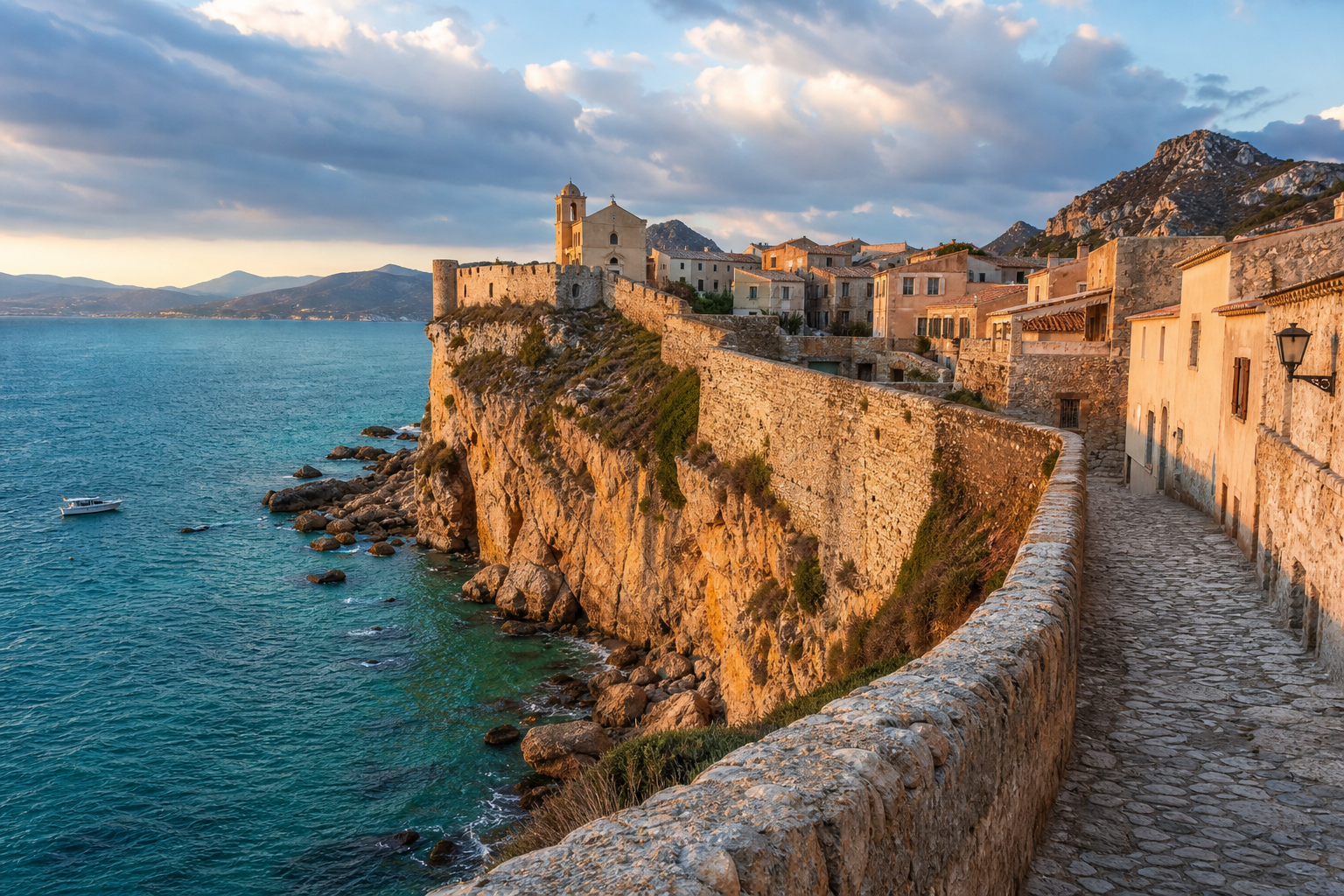 Tossa de Mar medieval walled town on cliff by the sea, sunset light illuminating the stone walls
Tossa is the only town on the Catalan coast with a preserved medieval walled quarter right on the sea — the Vila Vella, built in the 12th-13th centuries to defend against pirates. The walls, the cobbled streets, and the clifftop church create a setting that feels more like a fortress than a beach town.
Cultural identity: Historical, maritime, artistic. The town was a favorite of Marc Chagall, who visited in the 1930s and called it "blue paradise" (paradis bleu) for the intensity of the Mediterranean light. That artistic reputation continues — the town has several small galleries and a maritime museum inside the walls.
Festivals and events:
- Festa Major (late June) — The town's main festival, with traditional dancing (sardanes), fireworks, and music in the walled quarter. The walls are lit up at night.
- Terra de Maravelles (July) — Cultural festival with concerts and exhibitions in historic settings.
Market day: Thursday morning, in the new town outside the walls.
Restaurant picks:
- La Cuina de Can Simón (Carrer del Portal 16) — Modern Catalan cuisine inside the old town; small and popular, book ahead
- Restaurant Capri — Traditional seafood paella by the beach
- Punta del Diamant — Clifftop restaurant inside the walls; best for sunset drinks
Stay overnight if: You want to walk the walls at sunset and dawn without rushing for the bus. Day trips work (1h15min by bus), but the last bus leaves early (around 8pm in summer).
Cadaqués: Surrealist Art and Dalí's Legacy
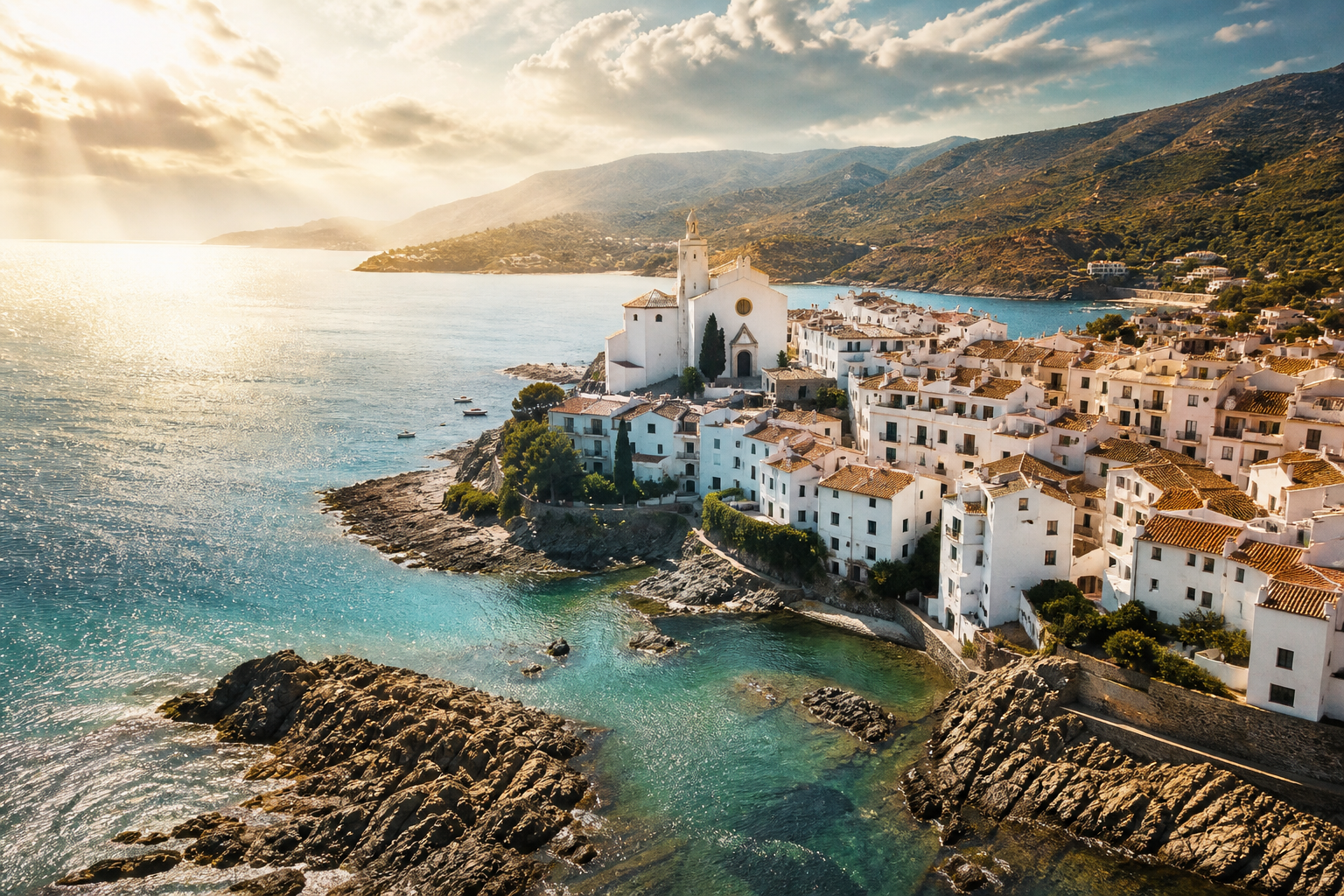 Cadaqués white village with church on peninsula, turquoise water, rocky coastline, golden sunlight
Cadaqués is the most remote of the five towns — a 2-hour drive from Barcelona over the Cap de Creus peninsula — but its cultural weight is out of all proportion to its size. The whitewashed streets, the church-topped headland, and the extraordinary light have drawn artists for over a century, most famously Salvador Dalí, whose house in nearby Portlligat is now a museum.
Cultural identity: Artistic, surreal, timeless. The town feels like a painting — which is fitting, since it inspired many of Dalí's works. The light here, shaped by the Cap de Creus winds, is unlike anywhere else on the Catalan coast.
Festivals and events:
- Festa Major (August) — Traditional festival with music and dancing in the main square.
- Art exhibitions (year-round) — The town has several small galleries; check the Casa de la Cultura for current shows.
Market day: Monday morning, in the center near the church.
Restaurant picks:
- Compartir (Carrer del Dr. Callís 3) — Modern Catalan sharing plates, founded by former elBulli chefs; book well ahead
- El Barroco — Casual sandwiches and salads; good for a quick lunch
- La Sirena — Seafood and rice dishes by the waterfront
Stay overnight if: You want to visit Dalí's house without rushing (the house has limited entry and requires advance booking), or you want to experience the town's magical early-morning light. Day trips are exhausting — 4+ hours of driving round-trip.
Begur: Indiano Trade Wealth and Medieval Architecture
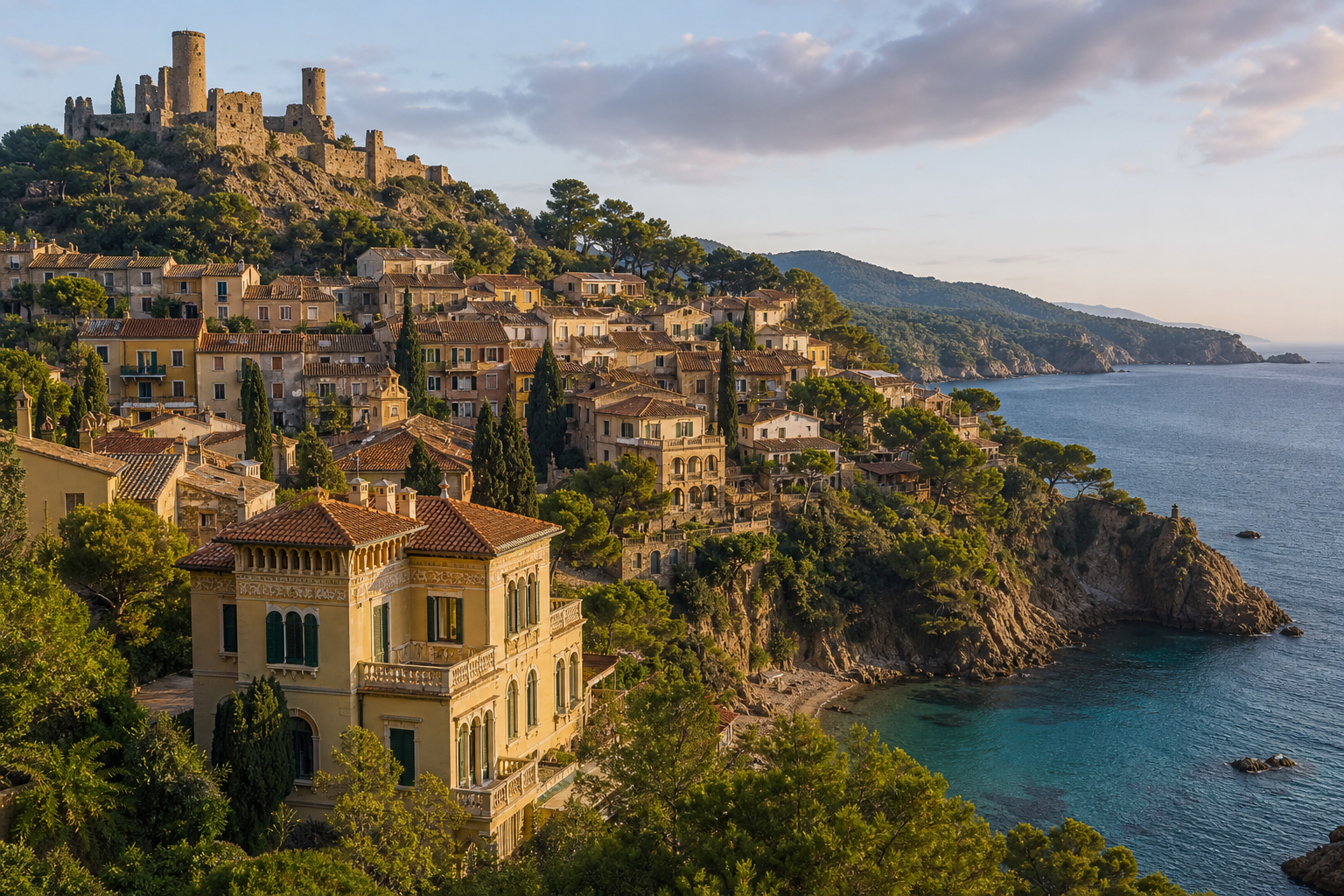 Begur hilltop town with medieval castle ruins and ornate Indiano mansions overlooking turquoise cove
Begur is the least known of the five towns outside Catalonia, but it's the most architecturally distinctive. The town sits on a hilltop in the Baix Empordà, dominated by a medieval castle, and its streets are lined with "Indiano" mansions — ornate houses built by Catalans who emigrated to the Americas in the 18th-19th centuries, made their fortunes, and returned to show off their wealth.
Cultural identity: Aristocratic, historical, upmarket. Begur is quieter and more refined than the main Costa Brava resorts, with a year-round local community rather than a transient tourist crowd.
Festivals and events:
- Festa Major (late July) — Traditional festival with concerts, dancing, and fireworks around the castle.
- Cap Roig Concerts (July-August) — Open-air concerts in the Cap Roig Botanical Garden, 20 minutes away; international artists in a stunning clifftop amphitheater. Book weeks ahead.
Market day: Wednesday morning, in the town center.
Restaurant picks:
- Can Torres — Traditional Empordà cuisine in the old town
- Espi Bar — Casual tapas and drinks; good for sunset
- Sa Tuna restaurant (at the cove) — Seafood with sea views; a 10-minute drive from the town
Stay overnight if: You want to explore the scattered coves (Aiguafreda, Sa Tuna, Cala d'Aiguablava) without rushing. Begur is a base town — the coves are a short drive away, and public transport is limited.
Calella de Palafrugell: Maritime Folk Traditions
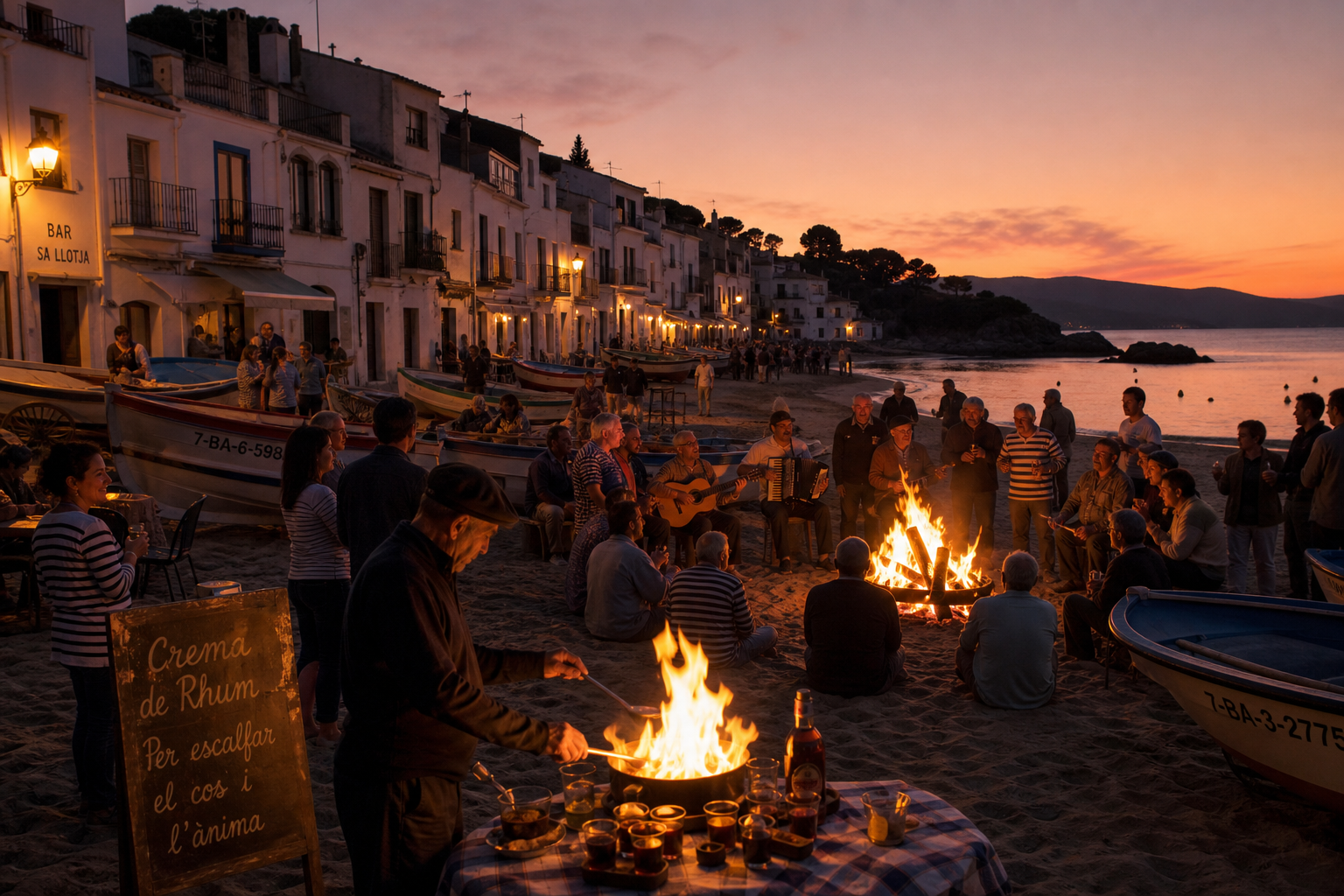 Calella de Palafrugell beach at dusk, locals singing havaneres around bonfire, Crema de Rhum, fishing boats
Calella de Palafrugell is the most traditionally Catalan of the five towns. It retains the character of a fishing village — low whitewashed houses, a small bay, and a seafront promenade — and its cultural identity is rooted in maritime folk traditions rather than art or architecture.
Cultural identity: Traditional, musical, authentic. The town is famous for the Cantada d'Havaneres, a sea-shanty festival that celebrates the Catalan maritime tradition and draws thousands every July.
Festivals and events:
- Cantada d'Havaneres (first Saturday of July) — The town's signature event. Locals gather on the beach at dusk to sing havaneres (sea shanties with Cuban origins, brought back by Catalan sailors) and drink cremat (a warm rum-based drink that's flambéed before serving). Free to attend; arrive early for a spot on the sand.
- Cap Roig Botanical Garden (year-round) — One of the most beautiful gardens on the Mediterranean, a 45-minute walk along the coastal path from Calella. The garden hosts summer concerts (see Begur entry).
Market day: Saturday morning, in the town center.
Restaurant picks:
- Can Mario (on the seafront) — Fresh seafood and arros a la cassola; book ahead in summer
- La Vela — Tapas and rice dishes by the beach
- El Forn — Casual lunches and sandwiches; good for beach days
Stay overnight if: You want to attend the Cantada d'Havaneres (the festival runs into the night) or you want to walk the coastal path to Cap Roig without rushing.
Festival Calendar
| Festival | Town | When | Duration | Book ahead? |
|---|---|---|---|---|
| Carnival | Sitges | February (variable) | 1 week | Yes, 6+ months |
| Corpus Christi | Sitges | June (variable) | 1 day | No |
| Sitges Pride | Sitges | June | 3 days | Yes, 2+ months |
| Festa Major | Tossa | Late June | 3 days | Yes, 1+ month |
| Terra de Maravelles | Tossa | July | 2 weeks | No |
| Cantada d'Havaneres | Calella | First Saturday of July | 1 evening | No (free, arrive early) |
| Festa Major | Begur | Late July | 3 days | Yes, 1+ month |
| Cap Roig Concerts | Near Begur/Calella | July-August | 6 weeks | Yes, weeks ahead |
| Film Festival | Sitges | October | 10 days | Yes, 1+ month |
| Festa Major | Cadaqués | August | 3 days | Yes, 1+ month |
Market Days
| Town | Day | Location | Best for |
|---|---|---|---|
| Sitges | Thursday | Center near church | Produce, seafood, crafts |
| Tossa de Mar | Thursday | New town outside walls | Produce, household goods |
| Cadaqués | Monday | Center near church | Produce, fish, local products |
| Begur | Wednesday | Town center | Produce, Empordà products |
| Calella de Palafrugell | Saturday | Town center | Produce, seafood, crafts |
Overnight vs Day Trip: A Quick Guide
| Town | Day trip? | Overnight? | Why |
|---|---|---|---|
| Sitges | Yes (35min train) | For festivals/nightlife | Easy day trip; stay for Carnival or film festival |
| Tossa de Mar | Yes (1h15min bus) | For walls at dawn/dusk | Last bus leaves early; stay to avoid rushing |
| Cadaqués | Exhausting as day trip | Yes, recommended | 4+ hours driving round-trip; stay for the light |
| Begur | Yes (1.5h drive) | For exploring coves | Base town for scattered coves; limited transport |
| Calella de Palafrugell | Yes (1.5h drive) | For Havaneres festival | Festival runs late; stay for the full experience |
Brief Mentions: Towns Covered Elsewhere
These towns appear on beach-town lists but are covered in detail in other guides on this site:
- Blanes — Gateway to the Costa Brava with the Marimurtra Botanical Garden. See the day trip guide for a full itinerary.
- Castelldefels — Long sandy beach close to Barcelona. See the airport guide for access and the swimming guide for water conditions.
Highlights
- Cultural Identities: Each town's distinct character explained
- Festival Calendar: Dates, durations, and booking deadlines
- Market Days: When and where to find local life
- Restaurant Picks: Named restaurants with booking advice
- Overnight Logic: When to stay vs day trip
- Two New Towns: Begur and Calella covered in depth for the first time
Highlights
How to Get There
Trains and buses from Barcelona.
Quick Info
Local Tip
Visit during local festivals for the most authentic experience.
Other Beaches

Best Beaches Near Barcelona by Train
20-100 km from BarcelonaBest Beaches Near Barcelona for Families
0-40 km from BarcelonaBest Beaches Near Barcelona Airport
5-20 km from Barcelona AirportBest Beaches Near Barcelona City
0-5 km from city center