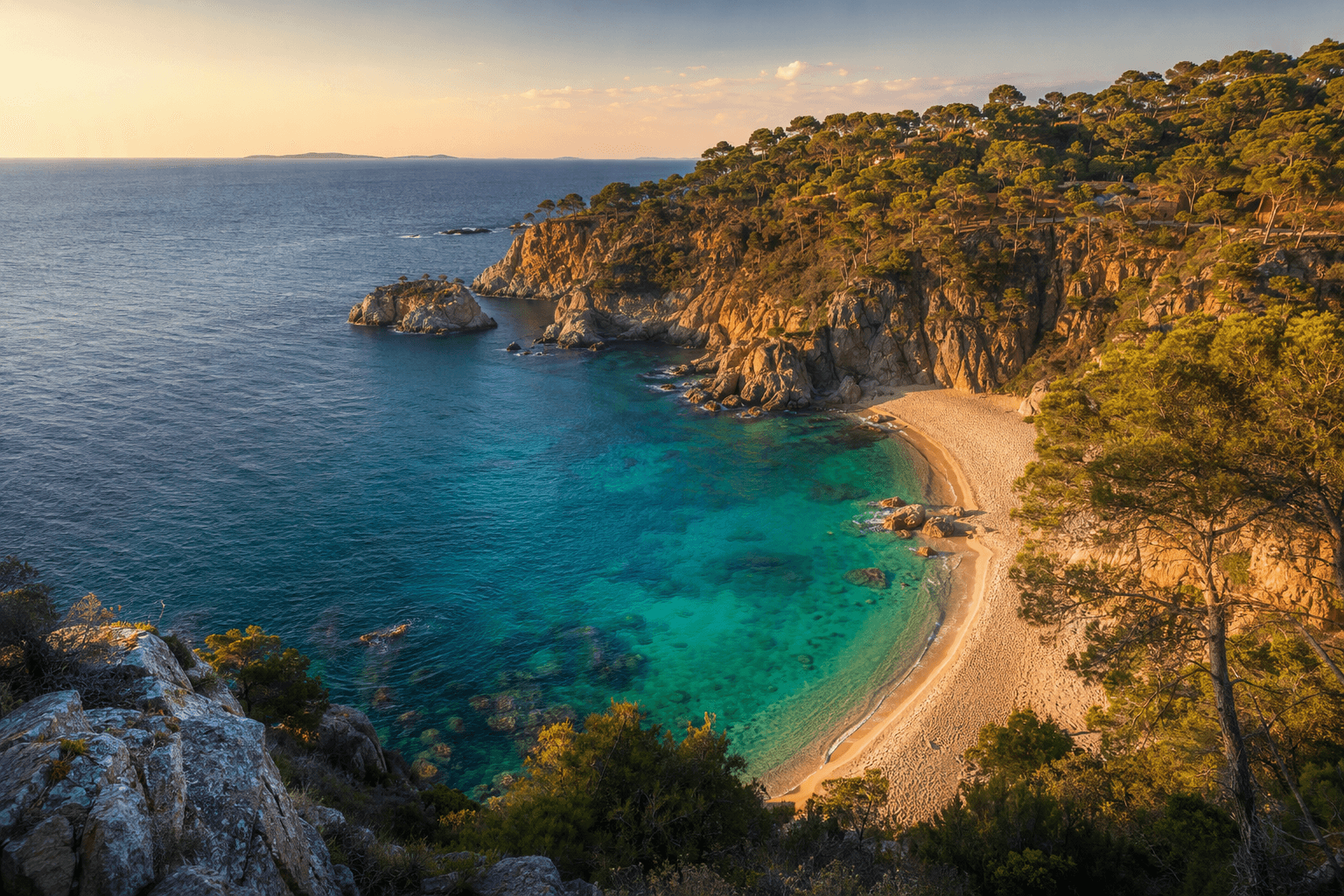
Best Hidden Beaches Near Barcelona
About Best Hidden Beaches Near Barcelona
A discovery guide to Catalonia's hidden coves — solitude ratings, access difficulty, facility checklists, and how to actually find them.
Most guides to the best hidden beaches near Barcelona describe the same coves and repeat the same "crystal-clear water" lines. This one is different: it's a discovery guide for people who actually want to find quiet — with solitude ratings, access difficulty levels, facility checklists, and the specific logistics (parking, walking times, what to bring) that determine whether a hidden beach stays hidden or becomes a disappointment.
The beaches covered here are the ones that don't appear on the main beach guides elsewhere on this site. Garraf and Portlligat are mentioned briefly where relevant, but their full descriptions live in the airport, swimming, and day-trip guides. This article focuses on the coves that are genuinely off the standard circuit — and on the practical question of how to reach them without a car, without facilities, and without crowds.
How to Use This Guide
Each beach is rated on three factors that most guides ignore:
- Solitude rating (1-5): How alone will you actually be? 1 = busy by hidden-beach standards, 5 = often completely empty
- Access difficulty (Easy/Moderate/Hard): How hard is it to get there? Includes walking time, terrain, and whether a car is required
- Facility checklist: What's actually there (toilets, showers, food, drinking water, lifeguard) — most hidden beaches have none of these
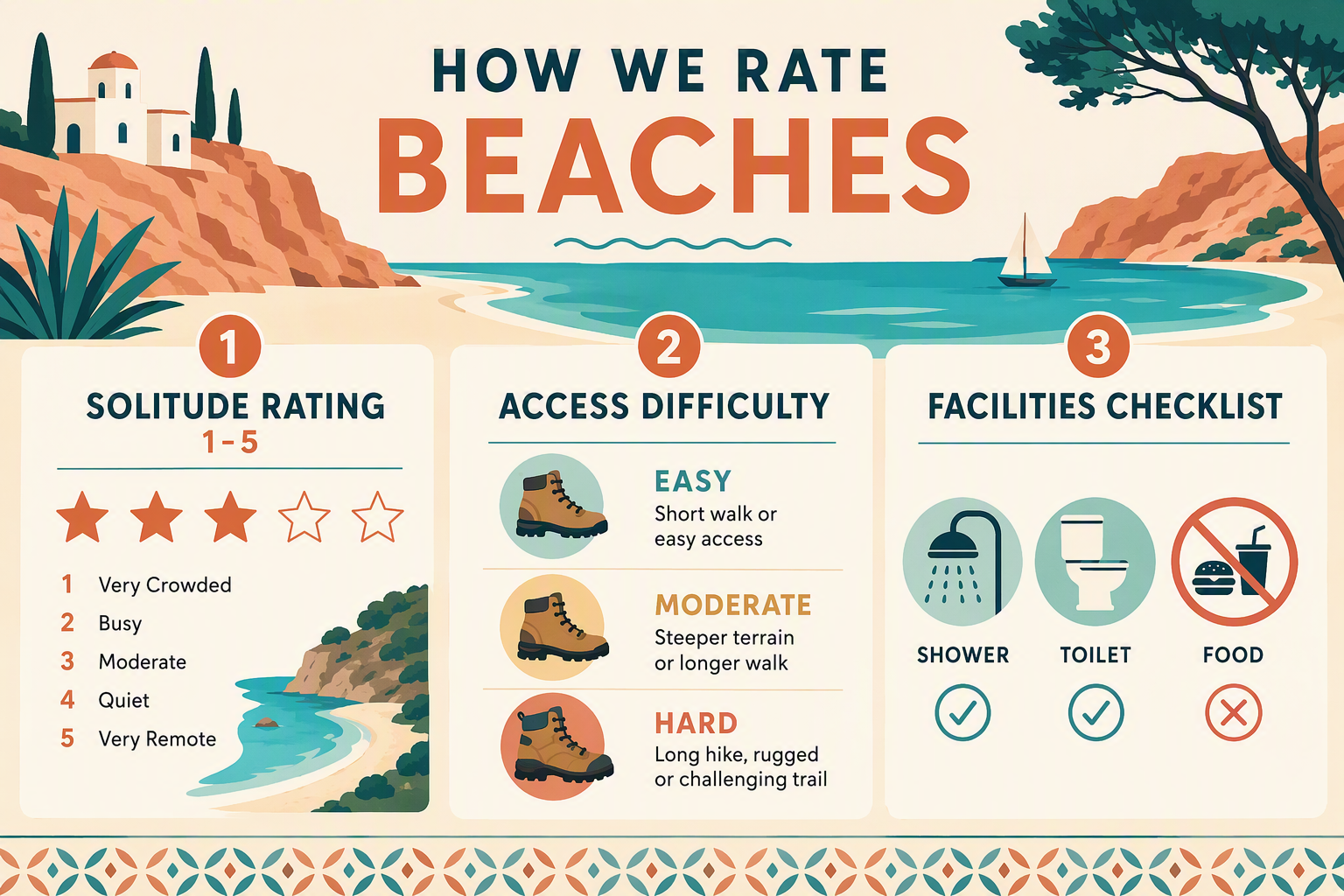 Modern infographic explaining beach rating criteria: solitude rating 1-5, access difficulty levels, and facilities checklist
The Hidden Beaches
Cala dels Àngels (Arenys de Mar)
- Solitude: 4/5 — You'll often have it nearly to yourself on weekday mornings
- Access: Moderate — R1 train to Arenys de Mar (about 1 hour from Barcelona), then a 15-minute walk along the coastal path
- Facilities: None — No toilets, no showers, no food, no lifeguard. Bring everything.
A small rocky cove north of Barcelona that rarely appears in guidebooks. The water is crystal-clear and perfect for snorkeling, with rocky formations that attract small marine life. The cove is reached via a coastal path from Arenys de Mar's fishing port — the walk is flat but rocky in places, so wear sturdy shoes. The effort required keeps the crowds away, which is precisely the point. Combine the trip with a wander around Arenys de Mar's old town and its traditional fishing port. The town has restaurants and shops; the cove does not.
Platja de les Caletes (Caldetes)
- Solitude: 3/5 — Local favorite, fills up on summer weekends
- Access: Easy — R1 train to Caldes d'Estrac (about 50 minutes from Barcelona), then a 5-minute walk
- Facilities: Limited — No beach facilities, but the town of Caldetes has cafes, restaurants, and public toilets
A small pebble beach framed by rocks and pine trees that come right down to the shore. The water is clear and calm, with a natural setting that feels far more remote than its train-station proximity suggests. Bring water shoes — the pebbly entry is tough on bare feet. The beach is small and can fill up on summer weekends, so arrive before 10am in July and August. Caldetes itself is a quiet spa town with thermal springs — a good excuse to extend your day trip with a soak at the local baths after your swim.
Platja del Castell (Palamós)
- Solitude: 3/5 — Quiet by Costa Brava standards, but not empty in August
- Access: Hard — 1.5 hours by car from Barcelona, then a 20-minute walk from the nearest parking
- Facilities: None — No beach bars, no sunbed rentals, no toilets. Protected natural area.
One of the last largely undeveloped beaches on the Costa Brava, backed by a medieval watchtower on the headland and surrounded by protected dunes and pine forests. The sand is wide and golden, the water is clear, and the setting is stunning — this is what the Costa Brava looked like before the resorts arrived. Reachable by car via Palamós, or by bus to Palamós followed by a walk. Go early in peak season — even hidden beaches fill up on August weekends. The walk from the parking area keeps the lazy crowds away, but the serious beachgoers will find it.
Cala Fonda (Tarragona)
- Solitude: 5/5 — Often completely empty, even in summer
- Access: Hard — 1.5 hours by car from Barcelona, then a 30-minute hike through a pine forest
- Facilities: None — Completely wild. No water, no shade, no help nearby.
A wild cove south of Barcelona, reachable only on foot through the protected pine forest of the Playa Larga nature reserve. The hike keeps almost everyone away — you'll likely share the cove with no one. The sand is golden, the water is crystal-clear, and the surrounding cliffs give it a dramatic, isolated feel. This is the most remote beach on this list — bring at least 2 liters of water per person, food, and a first-aid kit. There is no shade, so bring an umbrella or plan to leave by early afternoon. The hike is flat but sandy, which is tiring in heat. Park at the Playa Larga parking area and follow the marked trail north along the coast.
Cala Estreta (Palamós)
- Solitude: 4/5 — Quiet even in summer, thanks to the walk
- Access: Hard — 1.5 hours by car from Barcelona, then a 45-minute hike along the coastal path
- Facilities: None — Wild cove, no facilities
A hidden cove just north of Platja del Castell, reachable only by foot along the Camí de Ronda coastal path. The hike from the nearest parking (at Platja del Castell) takes about 45 minutes along a rocky but well-marked trail. The cove is small — maybe 30 meters wide — with clear water and a backdrop of pine forest. The walk keeps the crowds away even in August, when the main Costa Brava beaches are packed. Combine with Platja del Castell for a two-cove hike: start at Platja del Castell, hike north to Cala Estreta, and hike back. Allow 3-4 hours total.
Brief Mentions: Beaches Covered Elsewhere
These beaches appear on hidden-beach lists but are covered in detail in other guides on this site:
- Garraf — A sheltered cove 20 minutes south of Barcelona, good for snorkeling. See the swimming guide for snorkeling routes and the airport guide for access. Solitude: 2/5 (easy train access means it's not really hidden).
- Portlligat — Dalí's cove near Cadaqués. See the day trip guide for a full itinerary. Solitude: 2/5 (the Dalí house brings steady visitor traffic).
Solitude Comparison Table
| Beach | Solitude | Access | Facilities | Best for |
|---|---|---|---|---|
| Cala dels Àngels | 4/5 | Moderate (train + walk) | None | Snorkelers without a car |
| Platja de les Caletes | 3/5 | Easy (train + short walk) | Limited (town nearby) | Train-accessible solitude |
| Platja del Castell | 3/5 | Hard (car + walk) | None | Wild Costa Brava |
| Cala Fonda | 5/5 | Hard (car + hike) | None | True isolation |
| Cala Estreta | 4/5 | Hard (car + hike) | None | Hikers who want a reward |
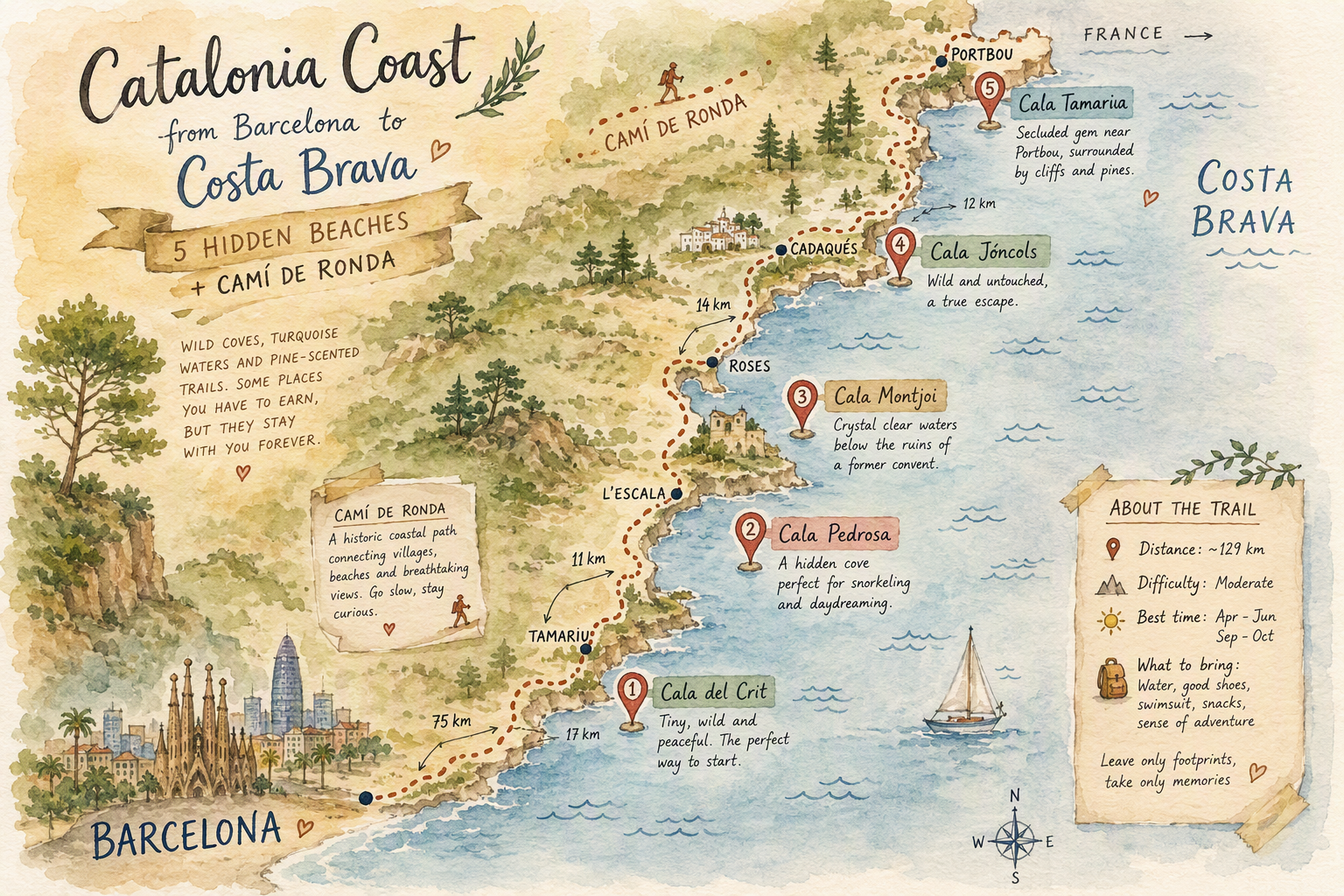 Watercolor hand-drawn travel map showing 5 hidden beaches from Barcelona to Costa Brava with coastal hiking trails marked
How to Find Hidden Beaches Yourself
The beaches above are a starting point. If you want to discover your own, here's how Catalans do it:
Follow the Camí de Ronda — The coastal footpath that runs along the Costa Brava from Blanes to the French border passes dozens of small coves that don't appear on maps. Start at any main beach and walk in either direction; when you see a path branching off toward the sea, take it. The best coves are the ones with no signs.
Check the Platges de Catalunya map — The Generalitat de Catalunya publishes an interactive map of every beach in Catalonia, including tiny coves that don't appear on Google Maps. Search for "Platges de Catalunya mapa" — the map shows facilities, access, and water quality for each beach.
Ask at the local bar — In any coastal town, the bar nearest the harbor is where the fishermen drink. Ask for "una cala tranquila" (a quiet cove) and they'll usually point you to one that's not in any guidebook. This works best in small towns (Arenys de Mar, Calella de Palafrugell, Llafranc) rather than big resorts.
Go in the morning — Hidden beaches are quietest before 11am, when the main beaches are still filling up. By 2pm, even hidden coves can have a handful of visitors. By 5pm, most people have left.
What to Bring to a Hidden Beach
Hidden beaches have no facilities — if you don't bring it, you don't have it. This is the kit list that most guides don't mention:
- Water (2 liters per person minimum) — No drinking water at any of the beaches on this list
- Food and snacks — No shops, no beach bars. Pack a proper lunch.
- Sunscreen and shade — No sunbeds, no umbrellas for rent. Bring a hat and a lightweight long-sleeve shirt.
- Water shoes — Essential for rocky coves (Cala dels Àngels, Platja de les Caletes, Cala Estreta)
- Towel and dry bag — A dry bag keeps your phone and keys safe if you swim from the beach
- First-aid kit — No lifeguards, no first-aid station. Bring plasters, antiseptic, and tweezers (for sea urchin spines)
- Rubbish bag — Hidden beaches stay hidden because they're not managed. Take everything out with you.
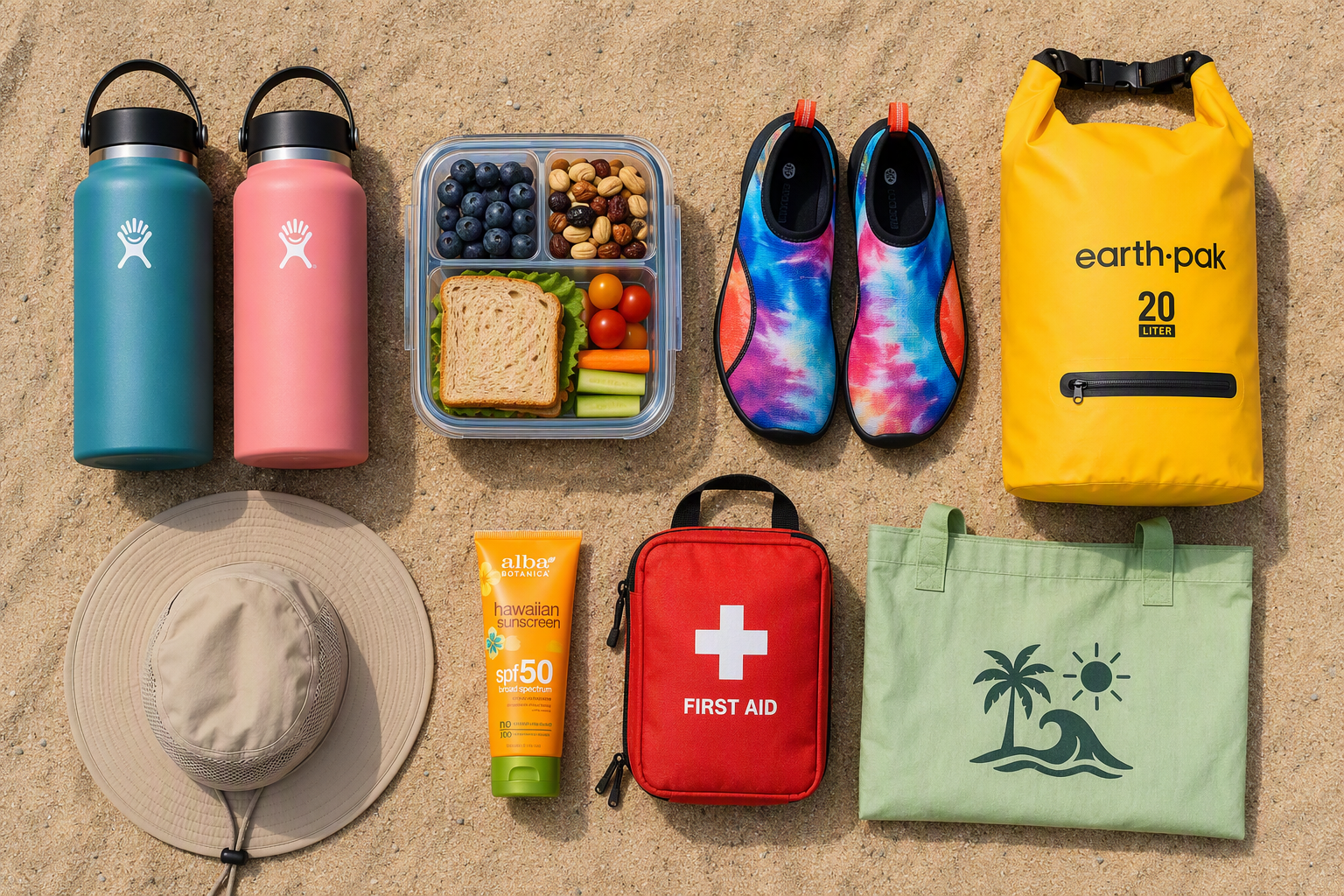 Flat lay photography of essential beach gear: water bottles, packed lunch, sunscreen, water shoes, dry bag, first-aid kit, sun hat, organized on sandy beach
When Hidden Beaches Aren't Hidden
August weekends are the enemy of solitude. Even Cala Fonda, which requires a 30-minute hike, can have 10-15 people on a Saturday in early August. If you want true solitude in August, go before 9am or after 5pm.
July and August weekdays are manageable — most hidden beaches will have 2-5 people, which is still quiet by most standards.
May, June, and September are the sweet spots. The water is warm enough for swimming (see the swimming guide for monthly temperatures), and you may have even the popular hidden beaches entirely to yourself.
October-April — The water is cold (13-18°C) and there are no lifeguards anywhere on the coast, but the beaches are at their quietest. Only for dedicated cold-water swimmers with wetsuits.
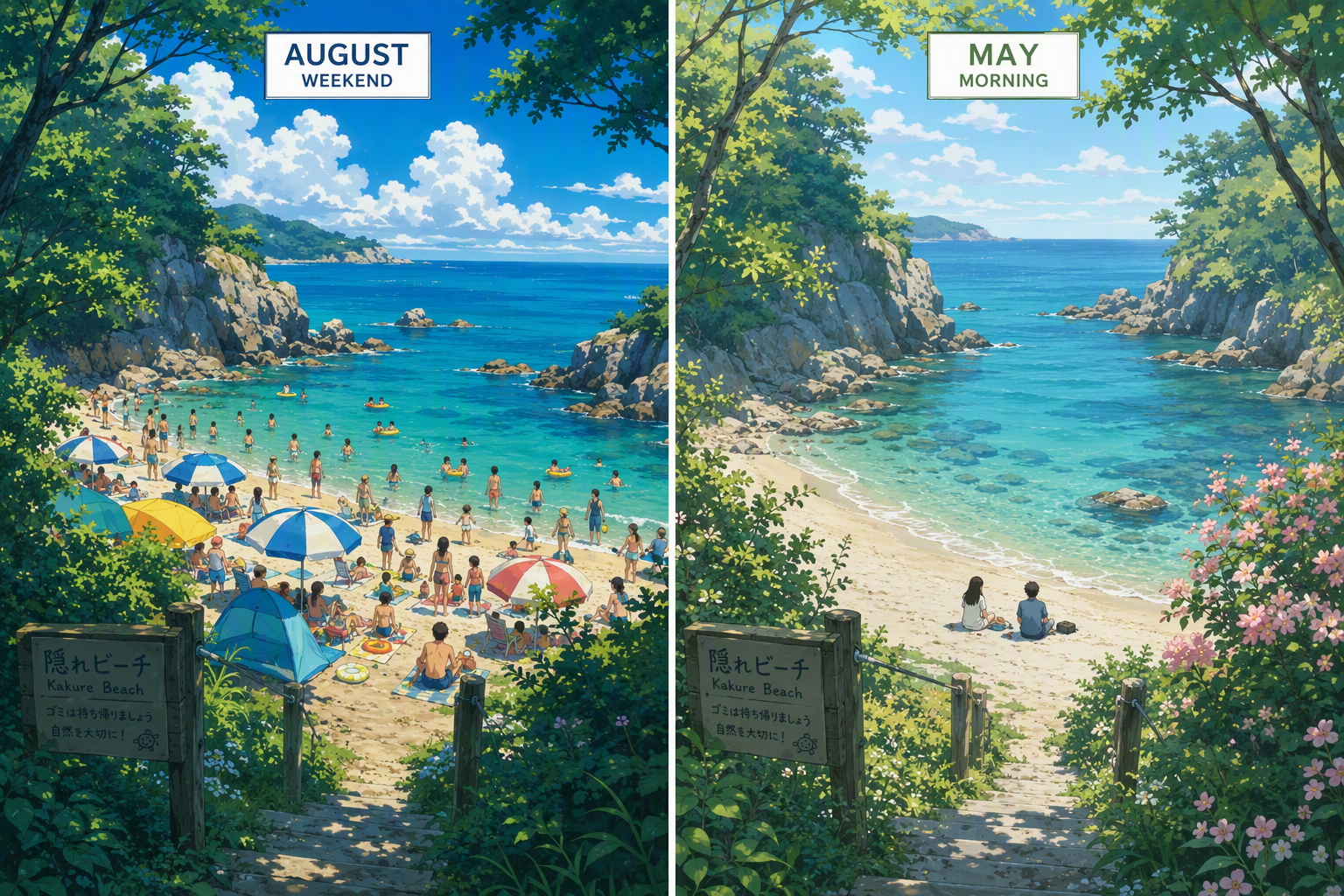 Anime style split comparison showing same hidden beach crowded in August weekend vs peaceful in May morning, seasonal contrast illustration
Highlights
- Solitude Ratings: Honest assessments of how alone you'll actually be
- Access Difficulty: Walking times, terrain, and car requirements
- Facility Checklists: What's there and what's not — most have nothing
- Discovery Methods: How to find your own hidden coves
- Pack List: The essential kit that hidden beaches require
- Timing Guide: When hidden beaches stay hidden, and when they don't
Highlights
How to Get There
Most require a train plus short walk or bus ride.
Quick Info
Local Tip
Visit early morning or off-season for the most peaceful experience.
Other Beaches

Best Beaches Near Barcelona by Train
20-100 km from BarcelonaBest Beaches Near Barcelona for Families
0-40 km from BarcelonaBest Beaches Near Barcelona Airport
5-20 km from Barcelona AirportBest Beaches Near Barcelona City
0-5 km from city center